
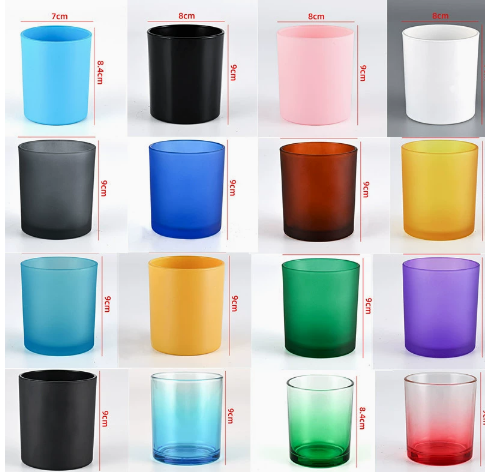
“Colored glass” can describe two very different products: glass whose color is created in the glass body, or clear glass finished with a colored surface coating. Both routes can produce attractive candle jars, but they differ in minimum quantity, color flexibility, appearance and quality-control priorities. Buyers should specify the route instead of approving color from a screen image alone.
Body-colored glass
In body-colored glass, the color is part of the glass material. The inside and outside show the same base tone, and minor surface wear does not reveal clear glass underneath. Amber and some green tones are familiar examples. This route can suit repeat programs where the color and production volume justify a dedicated manufacturing campaign.
The main purchasing questions are production quantity, acceptable shade range and how the color changes with wall thickness. Thick bases and ribs can look darker than thin walls even when the material is consistent. Approve the color on the intended jar shape, not on a flat color chip.
Spray-coated color
Spray coating applies color after the jar has been formed and annealed. It gives brands more flexibility for Pantone matching, opaque or translucent effects, gradients and seasonal colors. It is often practical when one standard jar body will support several collections.
Coating quality depends on surface preparation, application consistency and curing. Inspection should cover pinholes, dust, runs, coverage near the base and rim, and color variation between batches. If a logo will be printed on top, approve the coating and logo as one finished system.
| Decision point | Body color | Spray coating |
|---|---|---|
| Color location | Within the glass | Applied to the surface |
| Custom color flexibility | Depends on production campaign | Broad range of matched effects |
| Appearance on thick areas | Often deeper in tone | Controlled by coating coverage |
| Key inspection focus | Shade consistency and glass quality | Adhesion, coverage and surface defects |
| Branding sequence | Logo applied after forming | Logo must be tested over the coating |
Ask for physical boundary samples
A single “perfect” sample does not define a production tolerance. For an important color program, ask the supplier to provide an approved target plus acceptable lighter and darker limits. Review samples under consistent neutral lighting and keep the signed standards for later inspections.
Test the finished candle system
The jar supplier can confirm the container and decoration specification, but the candle brand or filler must validate the finished candle. Use production-equivalent wax, fragrance, wick and fill level. Check color appearance when empty, filled and illuminated, and confirm that labels, printing and lids remain compatible.
RFQ checklist for colored jars
- Target Pantone, reference sample or desired visual effect
- Transparent, translucent, matte or opaque appearance
- Body-color or applied-coating preference
- Jar shape, dimensions and expected order quantity
- Logo process and position
- Areas that must remain uncoated
- Color tolerance and inspection lighting
- Individual packing needed to prevent rubbing
See our colored candle jar options and custom finish services, or send a color reference for feasibility review.