
Choosing between candle jar and candle holder is one of the decisions that gets made quickly and regretted slowly. The two options solve the same problem in fundamentally different ways, and the right answer depends on what you are optimising for.
We manufacture pressed glass — which means we produce the candle jar option ourselves. We do not make candle holder. That is worth stating plainly, because the most useful part of this comparison is knowing which side of the table we are on.
The short answer
If the wax is part of the product, use a glass jar. If the vessel only has to hold a flame safely while the wax disappears, a holder is enough.
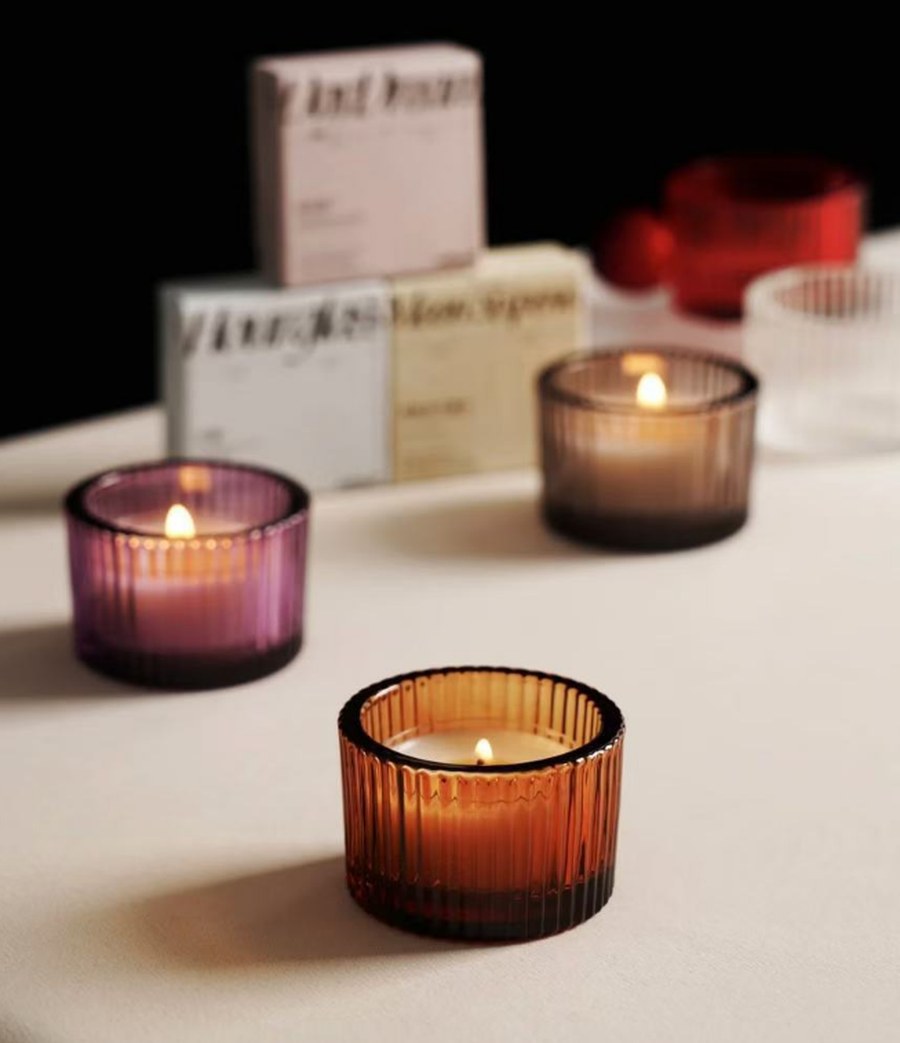
Where the two differ
| Factor | candle jar | candle holder |
|---|---|---|
| Product character | The wax is visible and part of the offer. Scents, colours and textures sell. | The vessel is a background object. It needs to be stable, not appealing on its own. |
| Refill potential | High. Jars are routinely refilled or repurposed after use. | Low. A holder is often left behind or discarded after the candle is gone. |
| Shipping efficiency | Good. Nested packing of straight-walled jars saves freight. | Poor. Holders are often bulky or irregular, costing more per unit to ship. |
| Customisation surface | Wide. Screen print, decal, spray, frost, plating all apply. | Narrow. Metal work is largely limited to stamping and welding. |
The factors that decide it
Where the jar wins
Home fragrance and gift-led retail. The container survives the customer, so the brand stays visible on the shelf long after the candle is gone. A repurposed jar on a bathroom shelf is ongoing advertising that costs nothing.
Where the holder wins
Table settings, events and situations where the wax is temporary. If the customer will not keep the object, spending on a beautiful container is waste.
Why many sellers stock both
Most serious home fragrance sellers eventually do. The jar format builds repeat purchase and perceived value; the holder format serves the table and gifting occasion at a lower price point.
How to avoid over-specifying
Buying a jar for a disposable event is the most common mistake. A simpler pressed format at a lower weight will serve the same purpose at a meaningfully lower landed cost.
What buyers tell us after the fact
The most common pattern we see: buyers start with the cheaper option, discover the hidden costs in year one, and move to the more durable one. If you have a repeat order cycle rather than a one-off promotion, the durability question decides the outcome more often than the unit price does.
The other common pattern is buyers who committed to glass for a range that was never suited to it, then had to re-tool. If your product is fundamentally refill, reuse or disposal-driven, changing container is a product decision, not a packaging decision.
How to evaluate any supplier on this
- Ask for the specification, not the photograph. Brimful volume, usable volume, mouth diameter, unit weight, glass type.
- Ask who made the mould. A manufacturer with its own tool room controls wall thickness. A trader accepts whatever the press gives them.
- Ask for the decoration durability answer in writing. Screen print, kiln-fired decal and adhesive label are three very different products.
- Ask for packing detail. 48 pcs per carton is our standard export configuration. Broken glass in transit is paid for once and never again.
If this format matches what you are looking at, request a quotation. We reply with pricing, lead time and packing detail — no obligation, and we will tell you honestly if your volume does not suit a particular format.