
Choosing between glass and metal is one of the decisions that gets made quickly and regretted slowly. The two options solve the same problem in fundamentally different ways, and the right answer depends on what you are optimising for.
We manufacture pressed glass — which means we produce the glass option ourselves. We do not make metal. That is worth stating plainly, because the most useful part of this comparison is knowing which side of the table we are on.
The short answer
Glass reads as premium and survives the product; metal reads as utilitarian and cheaper. Choose on shelf life, not on unit price.
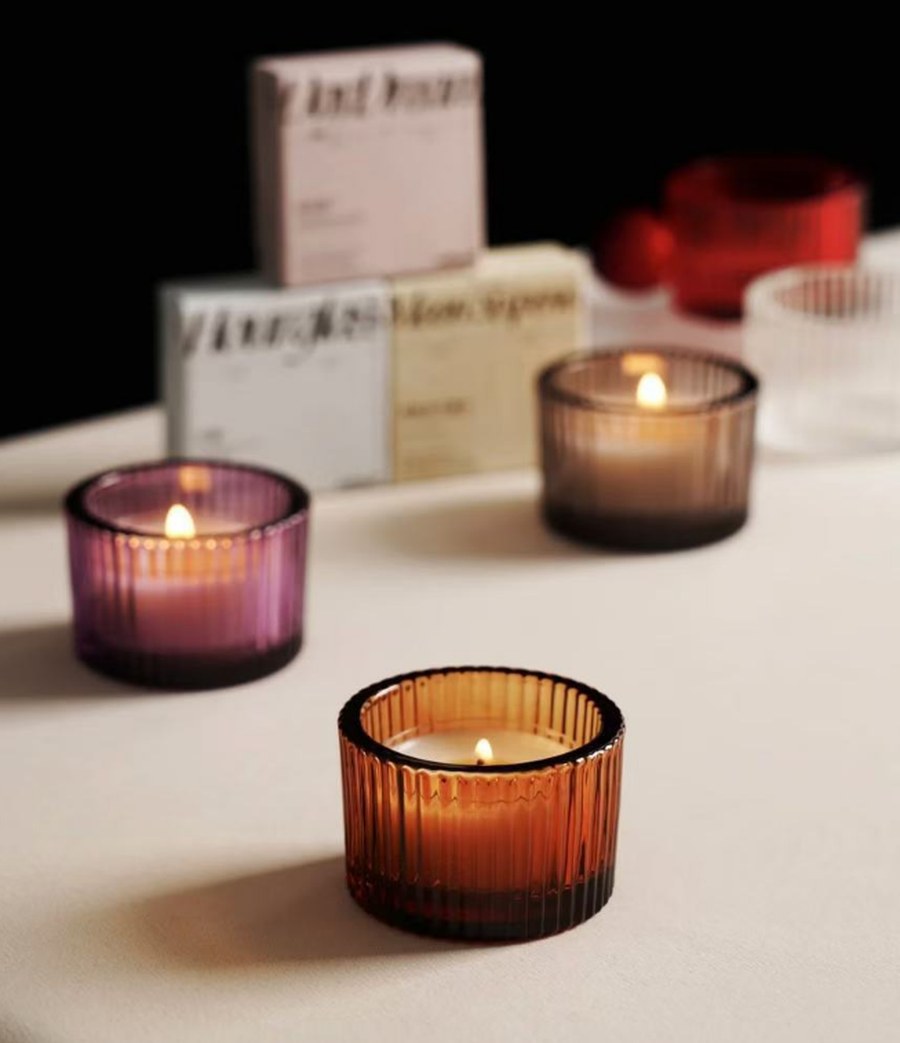
Where the two differ
| Factor | glass | metal |
|---|---|---|
| Perceived value | High. Glass carries the same visual language as fragrance packaging. | Functional. Reads as a fixture rather than a gift. |
| Post-product life | The jar is kept, refilled or repurposed. Brand stays in the home. | Usually discarded with the candle. No residual brand presence. |
| Heat behaviour | Glass handles container candle heat well. Borosilicate options handle higher loads. | Metal conducts heat — a genuine advantage where flame sits close to the vessel. |
| Shipping | Compact, nestable, low breakage with standard packing. | Dents and deformation in transit; often needs heavier protection. |
The factors that decide it
The hidden cost of metal
Metal holders are not automatically cheaper once tooling is counted. A stamped and welded design carries tooling cost that a glass mould carries too, and the raw material difference narrows at volume. Judge on landed cost, not piece price.
Safety argument for metal
If you are using a floating candle or a load-bearing flame arrangement, metal\’s heat tolerance is a real engineering advantage. For a standard container candle this argument does not apply.
Brand strategy
Glass supports branding after the sale. Metal does not. For a brand buying advertising with the product, the vessel is part of the media spend.
Weight and freight
Glass is heavier, which raises freight per piece. Metal is lighter. On low-value, high-volume orders the freight line can reverse the apparent cost advantage entirely.
What buyers tell us after the fact
The most common pattern we see: buyers start with the cheaper option, discover the hidden costs in year one, and move to the more durable one. If you have a repeat order cycle rather than a one-off promotion, the durability question decides the outcome more often than the unit price does.
The other common pattern is buyers who committed to glass for a range that was never suited to it, then had to re-tool. If your product is fundamentally refill, reuse or disposal-driven, changing container is a product decision, not a packaging decision.
How to evaluate any supplier on this
- Ask for the specification, not the photograph. Brimful volume, usable volume, mouth diameter, unit weight, glass type.
- Ask who made the mould. A manufacturer with its own tool room controls wall thickness. A trader accepts whatever the press gives them.
- Ask for the decoration durability answer in writing. Screen print, kiln-fired decal and adhesive label are three very different products.
- Ask for packing detail. 48 pcs per carton is our standard export configuration. Broken glass in transit is paid for once and never again.
If this format matches what you are looking at, request a quotation. We reply with pricing, lead time and packing detail — no obligation, and we will tell you honestly if your volume does not suit a particular format.