
storage jars, serving glass and premium dry goods packaging
Food grade glass is straightforward to supply and straightforward to verify. The declaration should cover both the glass composition and the specific batch.
We manufacture pressed soda-lime glass in Shandong, China, with our own tool room and our own press lines. Everything below reflects what we can actually produce and control, and we will tell you plainly where a request falls outside what we can do.
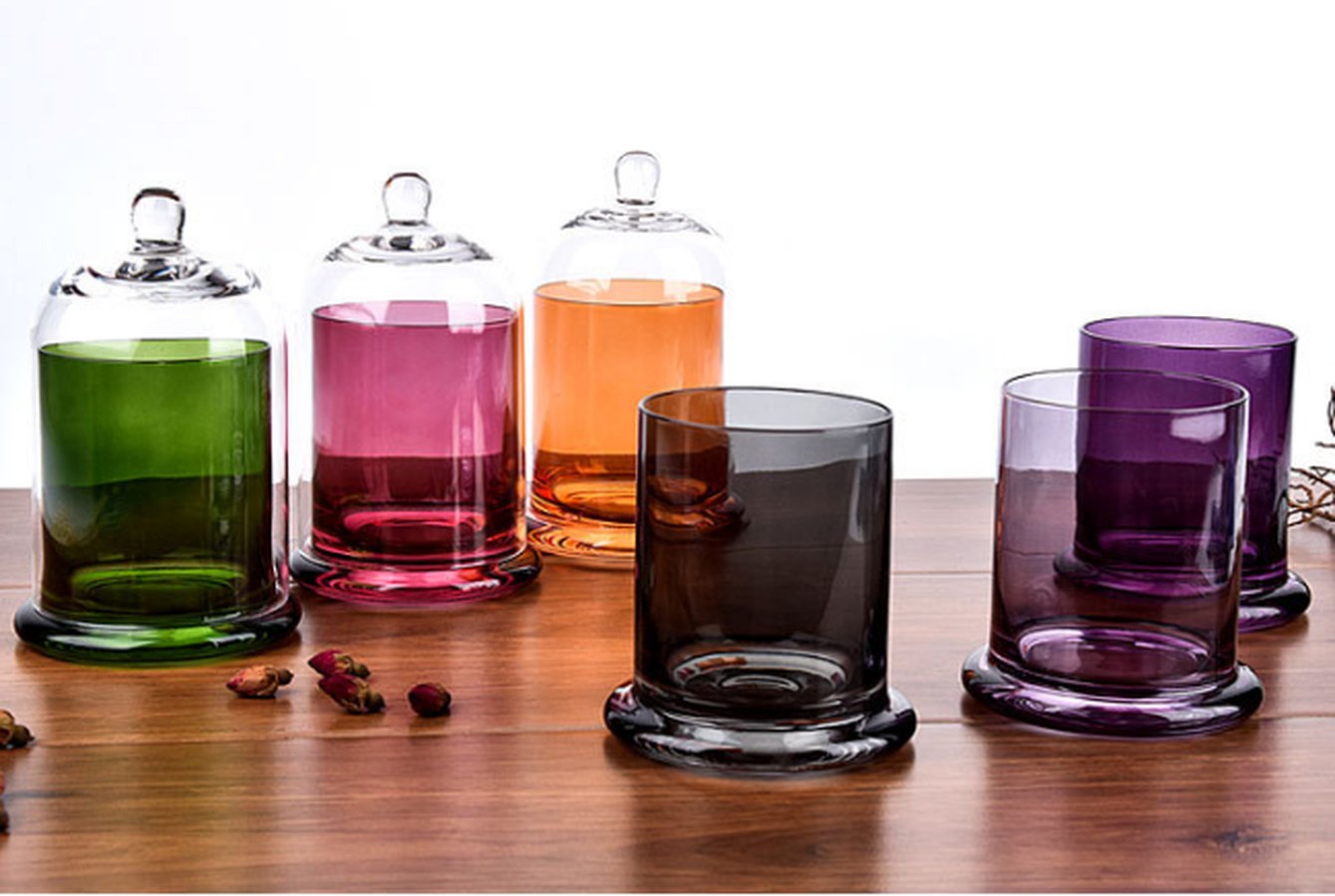
What supplying pressed glass for food and confectionery brands means documentation and consistency matter as much as unit price. need from a container supplier
Working with supplying pressed glass for food and confectionery brands means documentation and consistency matter as much as unit price. across many markets, the requirements that come up repeatedly are consistent enough to state plainly:
- Fill consistency between batches. A variation of more than 5ml in usable volume changes your burn time and your customer review scores. We control this at the press, not by sorting after the fact.
- Lead-free compliance as standard. Soda-lime glass is inherently lead-free. Buyers still ask for the declaration because some competitors use leaded cullet. Ask any supplier for their raw material statement — a genuine manufacturer has one.
- Packing that survives sea freight. Glass that arrives chipped is a margin loss, not a shipping cost. Standard export packing is 48 pcs per carton, palletised, with corner protection.
- Decoration durability. For food grade, any printed graphic must survive the end customer\’s washing or handling. Decal kiln firing gives you that; adhesive labels do not.
Format recommendations for food grade
| Format | Brimful | Usable wax | Weight | Why it fits food grade |
|---|---|---|---|---|
| 100 ml | 100 ml | 80–90 ml | 95 g | Small packs, trial sizes, sampler programmes |
| 155 ml | 155 ml | 120–135 ml | 140 g | Entry retail format, aromatherapy range |
| 250ml | 250ml | 195–215 ml | 215 g | Most common request in this segment |
| 315 ml | 315 ml | 265 ml usable | 250 g | Main line home fragrance, statement format |
| 400 ml | 400 ml | 310–340 ml | 365 g | Long burn and hospitality applications |
Specification you should receive before sampling
Ask for these seven numbers. If a supplier cannot provide all seven, you are negotiating blind.
- Brimful capacity in ml
- Recommended usable wax volume in ml
- Mouth diameter in mm
- Unit weight in g
- Glass type: soda-lime, pressed
- Decoration method and durability rating
- Pieces per carton and carton dimensions
Cost drivers specific to this segment
Decoration setup. A new silk screen or decal is a one-off tooling charge. If you are launching multiple sizes with the same artwork, the setup is often per design rather than per piece — ask explicitly.
Minimum order quantity. MOQ is normally counted per format, and colours can be mixed within a format. A 5,000-piece order spread across three colours is workable; a 5,000-piece order where each colour must be 5,000 is a different conversation entirely.
Freight density. At 215 g for the 250ml format, a 20-foot container holds a specific piece count. Ask your forwarder to confirm the actual loading plan rather than assuming.
Certification. For food grade, buyers in regulated markets will ask for food-grade or pharmaceutical-grade declarations where relevant. These are available; request them with the quotation.
Lead time
Existing formats in clear glass are usually the fastest route. New capacity, new shape or new decoration adds time. For food grade programmes we recommend confirming the production window at enquiry stage, and we will tell you if your target date is tight rather than promise and miss.
If this format matches what you are looking at, request a quotation. We reply with pricing, lead time and packing detail — no obligation, and we will tell you honestly if your volume does not suit a particular format.