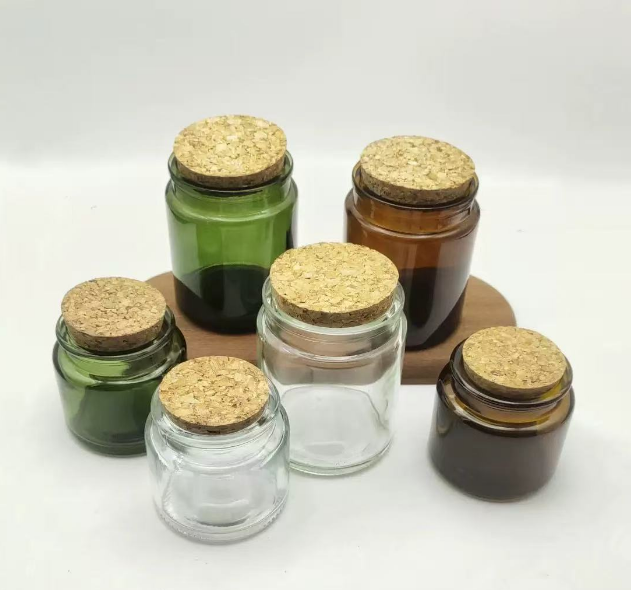
Importers searching for candle jars with wooden lids wholesale bulk production risk controls usually have an active sourcing decision, not a general research question. They need a supplier offer that can be converted into a purchase specification, an approval sample and an inspection plan.
This guide is written for candle brands, contract fillers and packaging distributors. It examines how to identify process variation before it becomes a shipment problem for a glass candle jar or candle vessel project. The discussion uses the original buying concern—specification-led product purchasing—as the commercial context.
Define the supplied package before price comparison
A useful specification describes the delivered outcome. It does not rely on a product name alone. The fields below should appear in the RFQ, supplier quotation and approved bulk production file.
| Control field | What the buyer should define |
|---|---|
| Application | Wax system, wick plan, target burn profile and sales channel. |
| Glass definition | Shape, nominal capacity, brimful volume, mass and critical dimensions. |
| Opening and rim | Inner diameter, outer diameter, roundness and edge condition. |
| Appearance | Glass color, finish, texture, logo process and approved viewing standard. |
| Components | Lid or accessory material, fit, gasket and packed assembly. |
| Safety validation | Representative burn testing with the intended wax, fragrance and wick. |
| Packing | Individual protection, divider design, carton count and pallet pattern. |
| Inspection | Defect classes, sampling plan, measurements and release documents. |
Control the steps most likely to create variation
Identify which characteristics come from the mould, forming setup, annealing, finishing line, component supplier and protective packaging method. Assign a control point and responsible party to each. Risk review is strongest when it follows the real process sequence.
Agree what happens when a control result trends toward a limit. Early adjustment is usually less costly than sorting finished goods. Require written approval before changing moulds, materials, color masters, decoration suppliers or key components.
Apply the control to this buying situation
For candle jars with wooden lids wholesale, the original buyer concern is specification-led product purchasing. Convert that concern into one drawing note, one supplier-evidence request and one inspection checkpoint. This creates a traceable link between search intent and the purchase decision.
Consider a mixed-container purchasing plan combining several shapes, sizes or accessory sets. In that situation, the buyer should identify the most expensive failure, the latest safe approval date and the evidence needed before releasing bulk production. Those three decisions determine which specifications deserve the tightest control.
Where sourcing projects lose control
The most expensive problems usually begin with an undefined interface or an assumption that never reached the purchase file. Review the following risks before asking for a final quotation.
- Decoration is judged under different light, distance or handling conditions at sample and shipment stages.
- The export carton protects factory transport but has not been validated for the buyer’s shipping route.
- A change in glass distribution, color master or subcontracted finish is not communicated before bulk production.
- An attractive sample is approved without recording capacity, mass, opening diameter or base flatness.
- The jar and lid are sourced separately, so the bulk production combination has never been approved together.
What this exact keyword changes in the specification
candle jars with wooden lids wholesale contains clues about the product, buying route or commercial constraint. Those clues should become written RFQ fields rather than remain search-language only.
The lid is a functional component, not an optional styling note. Record material, dimensions, liner or gasket, fit force, opening torque, odor, moisture behavior and color limits. Approve the bulk production jar-and-lid combination and state whether lids ship assembled or separately.
Wholesale and bulk orders need quantity breaks linked to real bulk production assumptions. Confirm units per SKU, color and artwork; stock availability; carton configuration; replenishment lead time; and how mixed orders affect minimums. Compare landed cost and damage exposure, not only the ex-factory unit price.
Apply these points to a gift-set program where bottle height, inserts and unboxing sequence must be coordinated. Ask each bidder to state its assumed construction, identify every exception and attach evidence that can be checked during sampling or pre-shipment inspection. That approach preserves the keyword\’s purchasing intent without repeating it unnaturally throughout the article.
Four questions to settle before requesting the final quote
- Is the closure included in the quoted unit and MOQ?
- Which drawing controls the jar-to-closure interface?
- What liner, gasket or plug material contacts the product?
- Will bulk production be inspected assembled or as separate components?
Record the answers beside the quotation instead of in a separate email chain. They should follow the project into sampling, purchase-order review and shipment inspection.
Evidence to request from shortlisted suppliers
A supplier should be able to connect its quotation to a repeatable bulk production and quality system. Ask for evidence that applies to the offered construction rather than unrelated certificates or promotional photographs.
- A representative approval sample produced through the intended manufacturing route.
- Process records showing how color, decoration, dimensions and assembly are controlled.
- A defect standard with photographs or boundary samples for subjective appearance issues.
- An inspection report tied to the order file, batch and kept approval units.
- A protective packaging specification with unit protection, carton data and pallet configuration.
- A written change-control rule covering moulds, materials, subcontractors and components.
When information is confidential, the supplier can still show document structure, revision control and representative records during a live review. The objective is to verify capability without requesting proprietary customer data.
Connect product approval to protective packaging and logistics
Glass quality can be acceptable at the factory and still fail during distribution. Define contact points, dividers, bags or sleeves, carton strength, gross weight, sealing method and pallet layout. Decorated surfaces need protection from abrasion as well as impact.
Use the intended sales channel to select tests. Container freight, regional pallet distribution and parcel delivery create different hazards. A test plan should state the packed configuration, conditioning, test sequence and pass criteria. Photographs and carton identification make results traceable.
Before shipment, compare the approved pack-out with packed bulk production. Small changes in component orientation or carton count can affect pressure, movement and breakage.
Next step
Turn this guide into a project-specific checklist and send the same controlled file to every shortlisted supplier. Jingqiao Glass can review your drawing, component list, decoration target and protective packaging route before preparing a quotation or sample plan.